Skip to Main Content (Press Enter)
I want to...
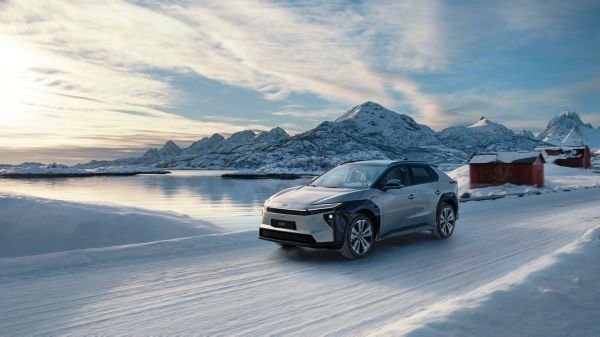
A Toyota bZ4X drives through a beautiful landscape

Range and everyday driving

There’s never been a better time to embrace all-electric. Smooth, quiet and fun to drive, the latest pure-electric vehicles have more range than ever and are ideally suited to busy modern lifestyles.

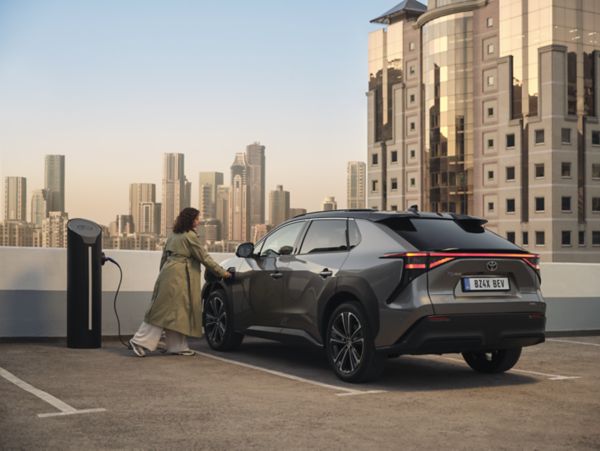
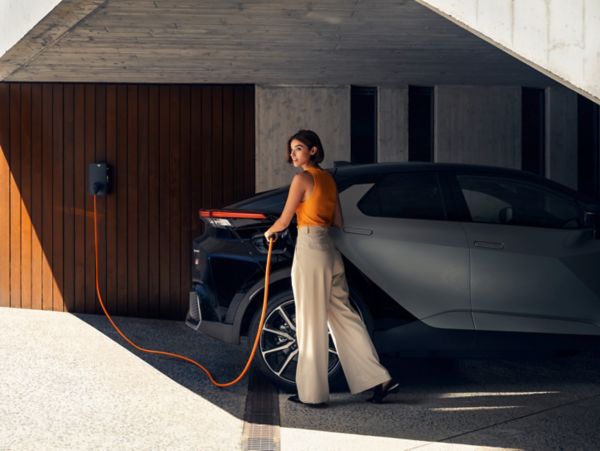
Where petrol and diesel cars require a trip to a fuel station when the tank runs low, a Toyota HomeCharge lets you charge your all-electric Toyota overnight while you sleep, so it’s ready to go again in the morning.

The right battery for you

Pure-electric vehicles use a high-voltage battery to store electrical energy. On the move, this energy is used to power the electric motors that drive your all-electric Toyota forward. Driving depletes the battery’s state of charge. Charging tops your battery back up.

Battery capacity

When it comes to pure-electric cars, a battery with a bigger capacity isn’t necessarily better. While an all-electric car with a bigger battery might be able to drive further without needing to charge, big batteries increase vehicle cost and weight.    

Battery capacity

Weight

The additional weight of a bigger battery impacts efficiency. A car with a big, heavy battery will use more electricity to travel a given distance than a lighter all-electric car with a smaller battery. It’s about choosing the right battery size for the driving you do. 

Weight

The right battery for you

Toyota’s all-electric cars use batteries that balance range, sustainability, efficiency, safety and cost. For instance, the bZ4X’s battery is optimised for everyday use while also offering the range for long-distance highway driving. 

The right battery for you

Charging speed

Charging speed is how quickly an all-electric car’s battery can be replenished with electrical energy. Many factors affect charging speed. The two key things are the power output of the charging equipment and your vehicle’s ability to accept that power.  

Charging speed

Battery lifespan and warranty

Toyota enjoys a global reputation for outstanding quality, durability and reliability. These attributes are Toyota hallmarks, and its advanced all-electric vehicles are no different. There’s no better illustration of this confidence than Toyota’s unrivalled Battery Care Programme, which covers the battery every year for up to 10 years of vehicle age or up to one million kilometres driven, subject to an annual battery health check*. Whichever all-electric Toyota you choose, rest assured it’s built to last. 

* Toyota’s confidence in the quality of the battery is reflected in a guarantee it will retain at least 70% of its capacity up to 10 years of vehicle age, covered by the original EV Manufacturing Warranty until 8 years of vehicle age or 160.000 kilometres, and with the Battery Care Program up to 10 years of vehicle age or 1 million kilometres driven that is activated by an annual EV Health Check.


Battery lifespan and warranty

Confident on the road

Range is crucial to choosing a powertrain. Find one that fits seamlessly into your lifestyle.

Battery Electric, Toyota bZ4X

The thrill and freedom of pure-electric driving.

  • The thrill and freedom of pure-electric driving.
  • 411km to 512km§ for the Toyota bZ4X
  • Charge on the move using the expanding public network
  • Top up your battery with incidental charging at shopping centres and motorway rest stops
  • Rapid charge up to to 80% in around 30 minutes◊

§ These range figures are estimates based on official homologation figures in a controlled environment (WLTP). These figures are provided solely for comparison purposes. Only compare them with other cars tested to the same technical procedures. The actual electric range value of your vehicle will vary from these calculated values, since many factors have an influence on a car's electric range. Such factors include: selected grade, optional equipment and accessories fitted, driving style, speed, road conditions, traffic, vehicle condition, tyre type (summer/winter) and pressure, vehicle load, number of passengers, external temperature, battery temperature, etc. For more info about WLTP visit https://dxp-global-en-prod.toyota.eu/content/toyota/global/en/electrification/worldwide-harmonised-light-vehicle-test-procedure or contact your local Toyota Centre. ◊ Subject to local conditions. In order to ensure effective charging and preserve battery health over the life of the vehicle, DC Fast Charging power of bZ4X may be reduced temporarily (roughly 24hrs) after two sessions per day (equivalent of four times 10% to 80% State Of Charge).

Profile of a Battery Electric Toyota bZ4X

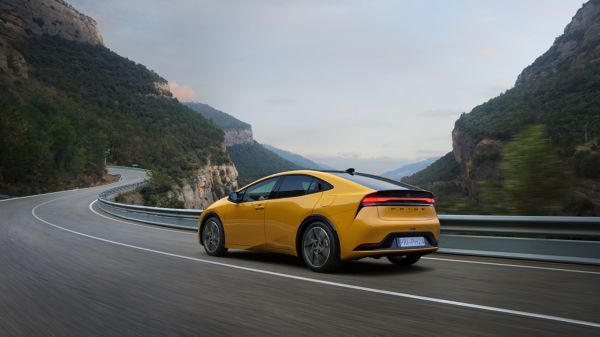
Plug-in Hybrid, Prius Plug-in Hybrid

Plug-in Hybrids offer increased electric-only driving range in EV mode than Hybrids.

  • Plug-in Hybrids offer increased electric-only driving range in EV mode than Hybrids.
  • 72km to 86km** pure-electric range for the Prius Plug-in Hybrid
  • Drive electric more often thanks to a bigger battery and the option to charge
  • Overall range is comparable with a conventional petrol or diesel car
  • Refuel normally at any petrol station, for complete flexibilty

** Combined WLTP figures. These range figures are estimates based on official homologation figures in a controlled environment (WLTP). These figures are provided solely for comparison purposes. Only compare them with other cars tested to the same technical procedures. The actual electric range value of your vehicle will vary from these calculated values, since many factors have an influence on a car's electric range. Such factors include: selected grade, optional equipment and accessories fitted, driving style, speed, road conditions, traffic, vehicle condition, tyre type (summer/winter) and pressure, vehicle load, number of passengers, external temperature, battery temperature, etc. For more info about WLTP visit https://dxp-global-en-prod.toyota.eu/content/toyota/global/en/electrification/worldwide-harmonised-light-vehicle-test-procedure or contact your local Toyota Centre.

Profile of a Toyota Prius Plug-in Hybrid

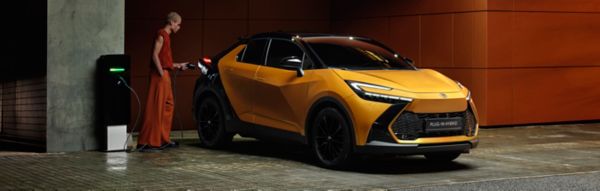
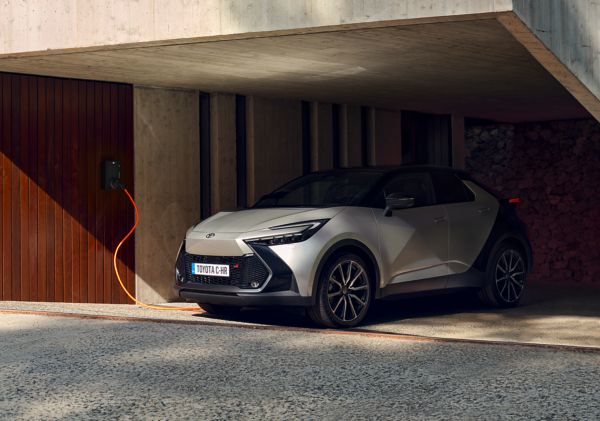
Hybrid, Toyota C-HR

With Dual DNA powertrains, Hybrids offer the best of both worlds – fill up with petrol, drive electric.

  • Easy to live with, Toyota self-charging§§ Hybrids combine electric and engine power.
  • Driving range can be longer than many conventional cars
  • Flexible and convenient, simply refuel at any petrol station
  • No charging is required, at home or on the move§§

§§ Combining the power of a highly-efficient petrol engine and one or more electric motors, Toyota self-charging Hybrids can charge themselves while you drive, slow down or brake. You can drive some distances in electric-only EV mode and never have to plug in or worry about battery range as the petrol engine takes over when the battery is empty.

Profile of a Toyota C-HR Hybrid
  • Range and efficiency explained

    Range is the distance an all-electric car can travel before charging is required. A longer range can be achieved with a bigger battery or by increasing efficiency – a more efficient vehicle can travel further on the same amount of energy than a less efficient one. Toyota works tirelessly to optimise efficiency by reducing weight, powertrain losses and aerodynamic drag wherever possible.

  • Drive smoothly

    Hard acceleration and high speeds use a lot of energy, so avoid them to increase your range. Driving smoothly, paying attention to the traffic ahead and anticipating changes in speed, will also reduce energy consumption.

  • Adapt to the situation 

    When travelling downhill or slowing down, release the accelerator earlier and coast where possible. In urban driving, try a higher level of regenerative braking (the Toyota bZ4X offers four levels) to feed electricity back into the battery as you slow down. 

  • Know your modes  

    Maximise your range by choosing the ECO driving mode. The climate control will default to Climate ECO mode, minimising energy usage while keeping the cabin comfortable. Only de-select Climate ECO if you really need to. Using cruise control will maintain a steady preset speed and reduce energy consumption.

  • Reduce resistance 

    Check your tyres pressures regularly. Low pressures increase energy consumption. When the time comes for new tyres, energy-saving tyres reduce rolling resistance and increase range. 

  • Travel light 

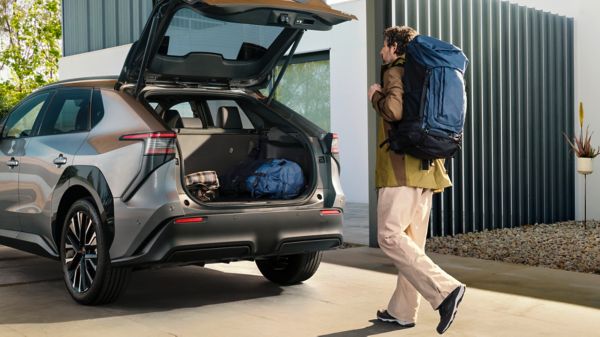
    A heavier car requires more energy to move. Removing unnecessary items from the boot and rear seats is a great way to increase your driving range.

  • Clear the roof 

    Roof racks and roof boxes should be removed for journeys that don’t require them. They create wind resistance and increase vehicle weight, increasing energy consumption.

Tips to maximise your electric range in your electrified* Toyota

Drive smoothly

Careful use of the accelerator, including driving at lower speeds and accelerating gently, will increase your range. Heavy-footed driving will drain your car’s battery at an accelerated rate. Electrified* vehicles feature strong torque, making it easy to drive with the flow of traffic while also going easy on the accelerator. Your driving range will be slightly reduced in wet and windy weather.

Drive smoothly

Optimise your car for range

Selecting Eco mode will help you drive more smoothly. Leverage your car’s energy-recovering braking function to help you to maximise range. To do this, select your car’s maximum regenerative setting. This will send extra power back to the vehicle’s batteries under deceleration, increasing its driving range.

Optimise your car for range

Go easy on heating and cooling

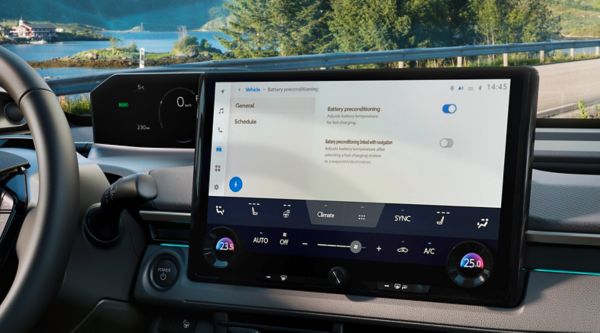
Extreme heater and air conditioning usage will put a significant drain on battery power. In winter, dial down the climate control and use the heated seats and steering wheel to maintain a comfortable temperature more efficiently. In summer, driving with the windows down is more efficient than setting the air conditioning to full chill. In both cases, heating or cooling your car while it’s still charging, ahead of a journey, will increase your electric driving range.

Go easy on heating and cooling

FAQS

  1. All

The WLTP range figure is an estimate based on the WLTP (Worldwide harmonised Light vehicle Test Procedure) regulations. These are a global standard Toyota follows rigorously. These figures are provided solely for comparison purposes. Only compare them with other cars tested to the same technical procedures. The actual electric range value of your vehicle will vary from these calculated values, since many factors have an influence on a car's electric range.

These factors include your selected grade, optional equipment and accessories fitted, driving style, speed, road conditions, traffic, vehicle condition, tyre type (summer/winter) and pressure, vehicle load, number of passengers and temperature. For more info about WLTP visit our website or contact your local Toyota Centre.

Selecting the Eco driving mode will increase efficiency and maximise range, as will activating your climate control’s Auto Eco Mode. Consider turning off the air-conditioning when not required and remember that your heated seats and steering wheel are a more energy-efficient way of staying warm than turning up the cabin temperature. Ensure your tyre pressures are correctly adjusted. Low pressures will increase their rolling resistance and reduce use range. Winter tyres also consume more electricity on dry roads than summer tyres.

Carrying unnecessary weight will increase energy usage, so be sure to remove surplus items from the car. Finally, consider modifying your driving behaviour. Drive at a constant, moderate speed wherever possible, avoiding unnecessary acceleration and braking. When you do need to alter your speed, do so smoothly to decrease your energy usage.

Our all-electric cars are built to the same high quality, durability and reliability standards as any other Toyota, and their batteries are engineered to last. Each one is covered by our extended care programme. It guarantees your battery will retain 70% of its original capacity over the first 10 years or one million kilometres driven.*

*Subject to annual health checks at a Toyota authorised service centre

Hitching a load to your all-electric Toyota significantly increases the overall weight the powertrain must move, increasing power consumption and reducing driving range. The extent to which range is reduced depends on the weight of the load being towed.  

* An electrified car is one propelled by one or more electric motors to some extent. Some electrified cars, including Hybrids and Plug-in Hybrids, also have a petrol engine. Others, like the Toyota bZ4X, are entirely electric. 

§ These range figures are estimates based on official homologation figures in a controlled environment (WLTP). These figures are provided solely for comparison purposes. Only compare them  with other cars tested to the same technical procedures. The actual electric range value of your vehicle will vary from these calculated values, since many factors have an influence on a car's electric range.

Such factors include: selected grade, optional equipment and accessories fitted, driving style, speed, road conditions, traffic, vehicle condition, tyre type (summer/winter) and pressure, vehicle load, number of passengers, external temperature, battery temperature, etc. For more info about WLTP visit https://dxp-global-en-prod.toyota.eu/content/toyota/global/en/electrification/worldwide-harmonised-light-vehicle-test-procedure or contact your local Toyota Centre.

Subject to local conditions. In order to ensure effective charging and preserve battery health over the life of the vehicle, DC Fast Charging power of bZ4X may be reduced temporarily (roughly 24hrs) after two sessions per day (equivalent of four times 10% to 80% State Of Charge).

** Combined WLTP figures. These range figures are estimates based on official homologation figures in a controlled environment (WLTP). These figures are provided solely for comparison purposes. Only compare them  with other cars tested to the same technical procedures. The actual electric range value of your vehicle will vary from these calculated values, since many factors have an influence on a car's electric range.

Such factors include: selected grade, optional equipment and accessories fitted, driving style, speed, road conditions, traffic, vehicle condition, tyre type (summer/winter) and pressure, vehicle load, number of passengers, external temperature, battery temperature, etc. For more info about WLTP visit our website or contact your local Toyota Centre.

§§ Combining the power of a highly-efficient petrol engine and one or more electric motors, Toyota self-charging Hybrids can charge themselves while you drive, slow down or brake. You can drive some distances in electric-only EV mode and never have to plug in or worry about battery range as the petrol engine takes over when the battery is empty.

*** Subject to annual health checks at a Toyota authorised service centre.

§§§ On the WLTP cycle for the Toyota bZ4X. These range figures are estimates based on official homologation figures in a controlled environment (WLTP). These figures are provided solely for comparison purposes. Only compare them with other cars tested to the same technical procedures. The actual electric range value of your vehicle will vary from these calculated values, since many factors have an influence on a car's electric range.

Such factors include: selected grade, optional equipment and accessories fitted, driving style, speed, road conditions, traffic, vehicle condition, tyre type (summer/winter) and pressure, vehicle load, number of passengers, external temperature, battery temperature, etc. For more info about WLTP visit our website or contact your local Toyota Centre.

◊◊◊ Emissions may be associated with other aspects of the car’s life cycle (including its manufacture), from the production of electricity and from day-to-day usage, such as from the tyres and brakes. 

**** Warranty in Europe. Check the local warranty for more details.

§§§§ WLTP cycle. Range subject to selected grades, powertrains and local driving conditions.