Skip to Main Content (Press Enter)
I want to...

Welcome to the Toyota Charging ecosystem

Home charging

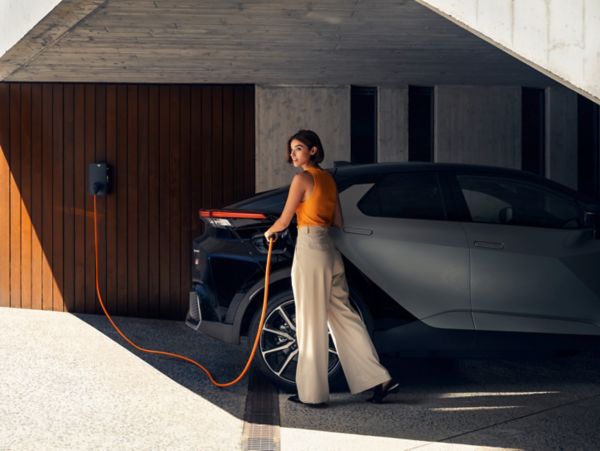
Easy and convenient, home charging is at the heart of the Toyota Charging ecosystem. Together, the MyToyota app and your Toyota HomeCharge charger will ensure your all-electric or Plug-in Hybrid Toyota is always ready for action.


Check your status

Information is power, and with the MyToyota app you can check your car’s state of charge, remaining range and charging status anytime, anywhere.

Charging your Toyota vehicle

Charging your Toyota is straightforward

  • Tips for increasing Reach

    Moderate your speed – range drops sharply at higher speeds – and monitor the flow of traffic to avoid sudden braking and acceleration. When slowing down, release the accelerator earlier and use energy regeneration to slow down. This will feed electricity back into the battery. 
  • Tips for increasing Reach

    Keep an eye on systems that use energy, such as heated mirrors, and switch them off when you can. Charging phones and other electronic devices also uses electricity, reducing range.  
  • Tips for increasing Reach

    Check your tyres pressures. Low pressures will increase energy consumption and reduce range. Avoid carrying unnecessary loads to reduce weight, and remove roof racks and roof boxes for journeys that don’t require them.  

FAQS

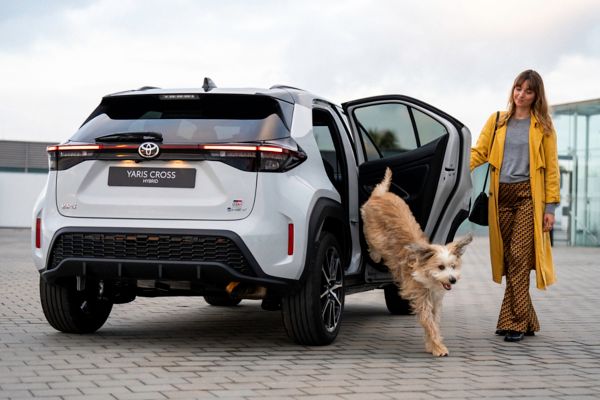
All Toyota Hybrid models feature pioneering self-charging battery technology. They are known as “Hybrid electric vehicles” because they have two sources of power: a gasoline engine and an electric motor. This means that, unlike pure electric vehicles, you do not have to connect them to an external power source. 

If the hybrid battery is not fully charged, it is recharged using excess energy from the gasoline engine. And that's not all. Our Hybrids have a regenerative braking system: when braking or coasting, electricity is generated, like a generator, which is then stored in the hybrid battery. 

If you're still wondering whether a Hybrid has to be plugged in, a little hint: with a Toyota Hybrid there are no cables, no plugs and no restrictions!

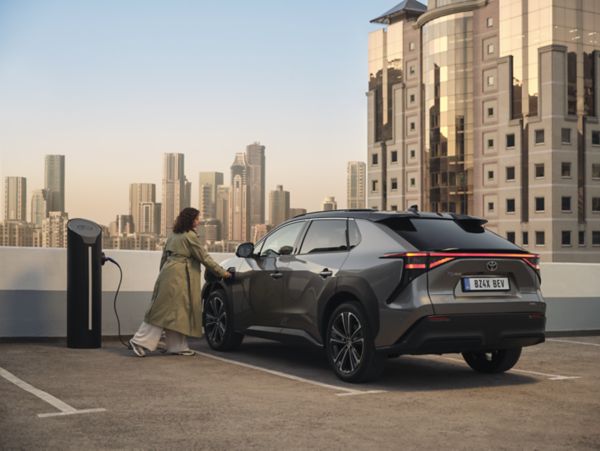
Charging an electric car is easy. Connected and convenient, a Toyota HomeCharge charger is the best way to charge, usually overnight at home. For charging on the go, there is an ever-growing network of charging stations, including fast chargers at locations such as motorway service stations. Though not ideal, you can also charge using the included cable and a standard household socket.

Whether at home, at work or at a public charging station, there are many ways to charge a Plug-in Hybrid. Connected and convenient, a Toyota HomeCharge charger is the best way to charge, usually overnight at home. For charging on the go, there is an ever-growing network of charging stations, including fast chargers at locations such as motorway service stations. Though not ideal, you can also charge using the included cable and a standard household socket.

Many public chargers work using a contactless RFID card. Unique and registered to you, tapping your card on the charger identifies you and begins the charging process.

Level 2 involves a dedicated charger and is a step up from Level 1, offering faster charging. Level 1 charging refers to charging from a standard domestic power socket, and it’s the slowest way to charge. Level 2 uses a Type 2 charging cable and delivers a higher power output for faster charging. 

Level 3 charging, also known as DC fast charging, is the fastest way to charge. The standard for fast public charging across Europe, DC fast chargers are the most common type of Level 3 charging station. They feature an integrated cable with a plug that incorporates both AC and DC connectors.

Some all-electric vehicles charge more slowly in cold weather because lower temperatures slow the electrochemical processes in the battery. However, cars like the Toyota bZ4X features a pre-conditioning system that ensures the battery is always at the optimal temperature for efficient charging.

* The stated values were determined according to the WLTP (World Harmonized Light Vehicle Test Procedure) test procedure and depend on the equipment. Your vehicle's electric range and power consumption values may differ from the measured or calculated values as many other factors influence a vehicle's electric range. These factors include, among others, driving behavior (e.g. speed), outside temperature, weather (dry, wet, windy), use of comfort/auxiliary consumers, road conditions, traffic, vehicle condition, tire type (summer/winter) and tire pressure, payload , number of passengers, special equipment, battery temperature during the journey.

For further information on the official fuel consumption and official specific CO2 emissions of new passenger cars, see the 'Guide to the fuel consumption, CO2 emissions and electricity consumption of new passenger cars'. which is available free of charge at all sales points and from Deutsche Automobil Treuhand GmbH (DAT) at www.dat.de . 

The stated charging times may vary - depending on the local charging conditions (e.g. type and condition of the charging station, battery temperature or ambient temperature).

◊ An electrified car is one propelled by one or more electric motors to some extent. Some electrified cars, including Hybrids and Plug-in Hybrids, also have a petrol engine. Others, like the Toyota bZ4X, are entirely electric.